
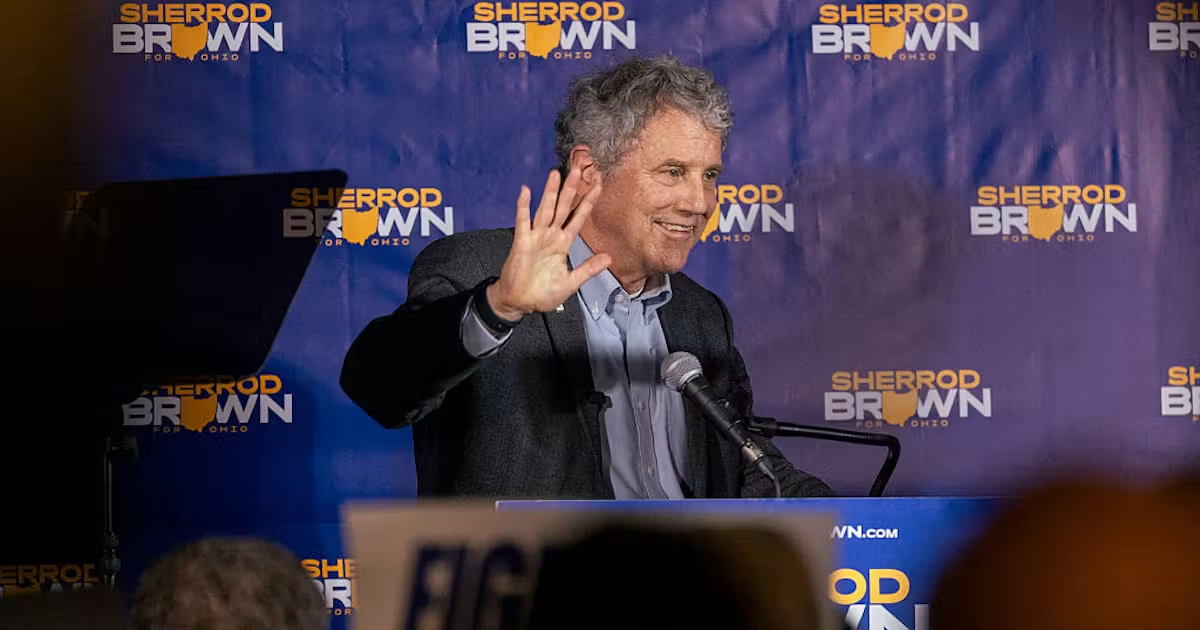
The political battle between Senator Sherrod Brown and the cryptocurrency industry has reached a fever pitch, as both sides prepare for a high stakes clash over regulation and digital assets. For years, crypto interests have poured millions into opposing candidates who threaten their decentralized vision, viewing Brown’s skepticism toward the sector as an existential threat. However, current trends suggest that this time, the senator may be better positioned to weather the financial storm than his predecessors or peers.
Brown has built his career on a brand of populist economics that resonates deeply with working class voters in Ohio. By framing his opposition to certain crypto practices as a defense of consumer protection and stability for everyday families, he avoids being painted simply as anti technology. Instead, he presents himself as a shield against volatile markets and fraudulent schemes that often target unsophisticated investors. This narrative allows him to pivot away from the industry’s massive spending power and lean into his identity as a champion for the common worker.
Furthermore, the broader public perception of the cryptocurrency market has shifted since its peak euphoria. A series of high profile collapses and scandals within major exchanges have left many voters wary of the very industries currently trying to buy influence in Washington. While lobbyists continue to push for deregulation, a significant portion of the electorate now views these entities with suspicion rather than awe. This cultural shift provides Brown with a strategic opening to argue that strict oversight is not just preferable but necessary.
Ultimately, the outcome depends on whether money can outweigh message in an era of deep institutional distrust. The crypto industry possesses nearly unlimited coffers to fund attack ads, yet Brown’s entrenched relationship with his constituents offers a different kind of currency. If he continues to successfully tie his regulatory stance to economic fairness and voter security, he may prove that some political identities are too strong for even the wealthiest special interest groups to dismantle.