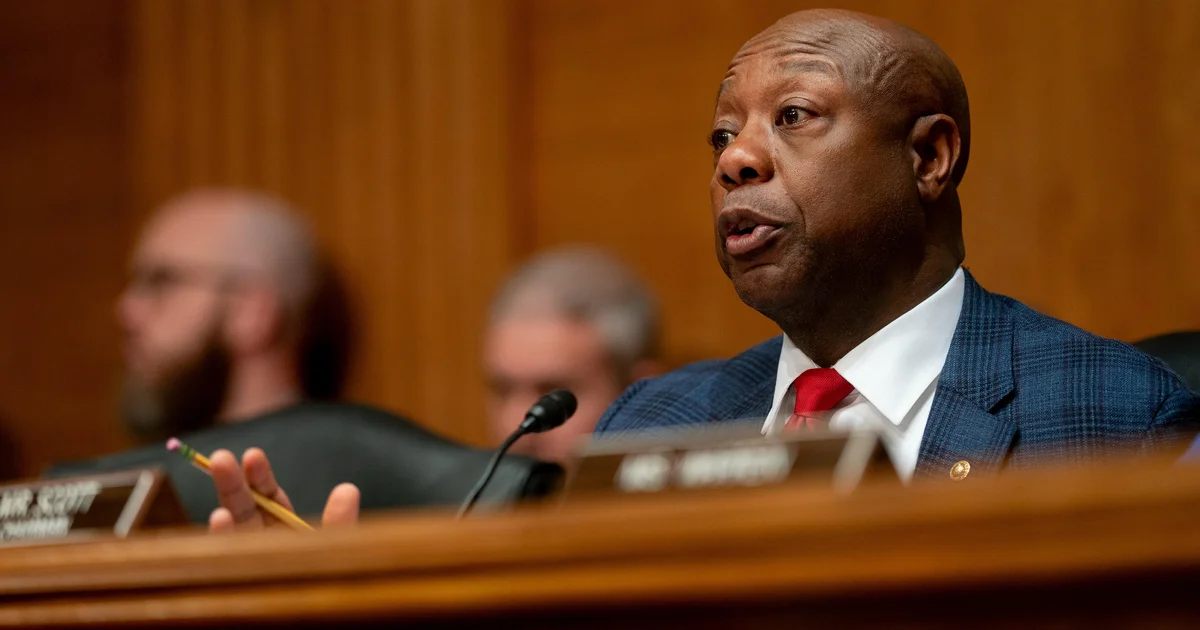
Behind closed doors, the leadership of the Senate Republican campaign arm is painting a picture of urgency mixed with cautious optimism. Senator Tim Scott, who heads the National Republican Senatorial Committee, recently warned his colleagues that the party is essentially in a fight for its life heading into the November midterms. Speaking at a private gathering on Wednesday, Scott acknowledged a record number of toss-up races and a challenging political climate characterized by sliding approval ratings for President Trump and widespread public frustration over inflation and conflicts in Iran.
Despite the grim assessment, Scott believes there is still a viable path to retaining control of the Senate. He pointed to the 2022 election cycle as a precedent, noting how Democrats managed to gain a Senate seat even while losing the House and grappling with poor polling for Joe Biden. To replicate that success, Republicans plan to concentrate their remaining financial resources on a small cluster of high-stakes contests. Defending incumbents in Maine, Texas, Ohio, Iowa, and Alaska remains a priority, while the party looks toward New Hampshire and Michigan as prime targets for flipping Democratic seats.
The strategy involves leveraging new legal avenues following a Supreme Court ruling that allows committees like the NRSC to coordinate more closely and spend more heavily alongside individual candidates. This financial push comes at a critical time given several volatile matchups. In Maine, veteran Senator Susan Collins faces another uphill battle in a shifting political landscape, while in North Carolina, former Governor Roy Cooper appears to be gaining momentum against Republican nominee Michael Whatley for an open seat. Meanwhile, Texas presents an unusual dynamic as Democrat James Talarico takes on Attorney General Ken Paxton, whose polarizing profile may provide an opening in a traditionally deep-red state.
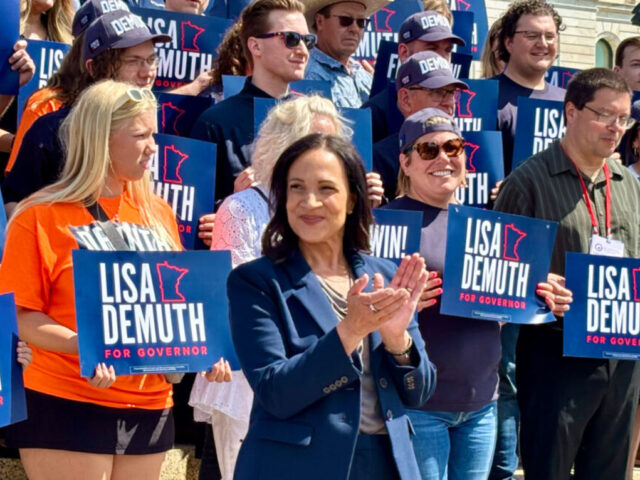
Currently holding a 53-47 majority, Republicans can weather the loss of up to three seats without surrendering the chamber entirely, provided Vice President JD Vance acts as the tiebreaker. While some races like Georgia look increasingly steep—leading some strategists to consider scaling back investments there—internal polls suggest movement in other areas like Minnesota_and North Carolina_. By focusing on specific vulnerabilities within Democratic nominations and relying on established political dynasties in places like New Hampshire, Scott argues that GOP lawmakers can survive the typical midterm headwinds and emerge intact.